

Formalwear Returned Structured and Fresh
Tuxedo Cleaning in Charlotte for event-related stains, odors, and shape loss in formal jacket and trouser sets
A tuxedo worn through a full wedding reception or gala accumulates more than visible staining—perspiration, body oils, and ambient food odors penetrate the fabric layers in ways that surface inspection alone won't reveal. Carolina Cleaners approaches tuxedo cleaning with a focus on preserving the structured components that define how formalwear fits and drapes, not just removing the marks that are easy to spot on a jacket lapel or trouser leg.
Tuxedos present specific cleaning challenges because of how they are constructed. Jacket fronts often include a canvas or interfacing layer that can separate or distort if exposed to moisture at the wrong temperature or pressure. Trouser pleats and creases are set at precise angles during tailoring and can be lost permanently if pressed without the right technique. Satin lapels and grosgrain trim—standard on most formal jackets—require different handling than the wool or wool-blend body fabric they are attached to, since satin can develop a crushed appearance or water marks if treated with general pressing methods. Stain removal from event-related sources like beef reduction sauces, red wine, or champagne requires identifying where those stains have migrated within the fabric before treating the surface.
Arrange a drop-off evaluation so the jacket, trousers, and any vests or accessories can be reviewed together before cleaning begins.
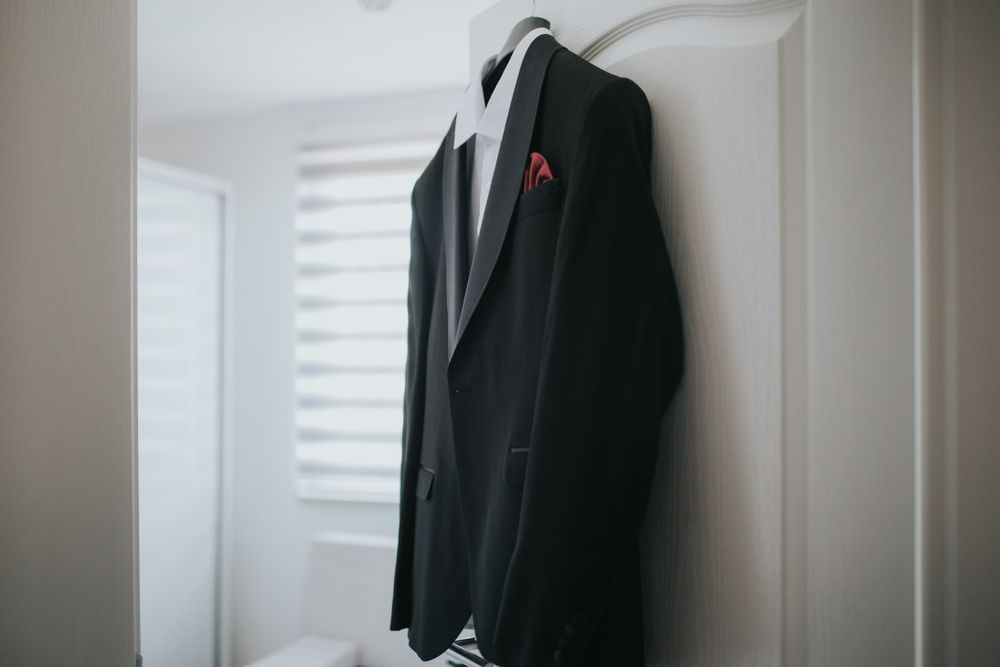
What Proper Tuxedo Care Requires
Cleaning a tuxedo correctly involves inspecting each component separately—jacket, trousers, and vest are often constructed from slightly different fabric weights or finishes, even when part of the same set. Perspiration and body oils that accumulate along collar edges, underarms, and waistbands are treated before the garment enters any cleaning process, because those compounds can oxidize and cause fabric yellowing or fiber breakdown if carried through without pre-treatment. Odor removal at the fabric level requires penetrating the weave rather than masking the surface.
After cleaning, the jacket holds its structured silhouette through the chest and shoulders rather than feeling limp or misshapen, and satin trim retains its surface sheen without the flattened or water-spotted appearance that results from incorrect pressing. Trouser pleats are re-established at their original angles, and the overall garment smells clean at the fabric level—not treated with a fragrance product applied over residual odor. Carolina Cleaners returns each piece finished and ready for immediate wear or proper storage.
Tuxedos that are rented rather than owned should still be inspected before return to confirm that cleaning requirements are noted—rental companies in Charlotte typically charge for stain treatment, and understanding what occurred during the event helps distinguish pre-existing condition from new damage. For owned tuxedos worn seasonally, cleaning before storage prevents the fiber degradation that results from oils and residue sitting in fabric over months between formal occasions.
What Tuxedo Owners Usually Ask
The questions below address the details most relevant to anyone preparing formalwear for cleaning after an event or before the next occasion.
Why does perspiration cause long-term damage to tuxedo fabric if not cleaned promptly?
Body salts and proteins in perspiration begin breaking down natural and synthetic fibers over time, and in Charlotte's warm, humid climate, that degradation accelerates—fabrics left uncleaned between events can develop permanent yellowing or weakened seams that are not visible until the garment is worn again.
How is satin trim cleaned without damaging its surface appearance?
Satin panels and lapels require controlled moisture application and low-temperature pressing with a pressing cloth barrier to avoid crushing the weave or creating water rings—techniques that differ significantly from how the base wool fabric is handled during the same cleaning session.
What stains are hardest to remove from tuxedo fabric?
Dark beverage stains like red wine or coffee that have been allowed to dry are among the most difficult because the pigment bonds to fabric fibers during drying—treating those stains within a day or two of the event significantly improves the outcome compared to waiting weeks.
How are trouser creases preserved through the cleaning process?
Silk organza, duchess satin, and chiffon each respond differently to moisture, heat, and mechanical action—a method that cleans polyester satin effectively can cause irreversible water spotting or shrinkage on natural silk.
What is included when a full tuxedo set is brought in for cleaning?
The jacket, trousers, and vest are each cleaned and finished according to their individual fabric and construction requirements, and accessories like bow ties or cummerbunds are evaluated separately since their fabric content often differs from the main garment.
Carolina Cleaners handles each piece of a tuxedo set according to its specific fabric and construction—not as a bundled garment run through a single process. Bring your formalwear in so each component can be reviewed and cleaned with the handling it actually requires.